


Sustainable Event Planning: Venues, Suppliers and Practical Ideas

Sustainable event planning is no longer a nice extra for corporate events. It is becoming part of the brief.
Clients are asking better questions. Guests are more aware of waste, travel and sourcing. Internal teams are under more pressure to show that events align with wider ESG, procurement and brand values. But planning a more responsible event does not mean stripping out atmosphere, food, design or guest experience. It means making better decisions earlier.
This guide explains how to approach sustainable event planning in a practical, evidence-led way, from venue sourcing and catering to suppliers, guest travel, waste and communications.
What does sustainable event planning actually mean?
Sustainable event planning means considering the environmental, social and economic impact of an event from the beginning, not just adding a recycling bin at the end.
That includes decisions around:
Venue location and accessibility
Energy use and building credentials
Catering, food waste and surplus food
Supplier travel and production materials
Event design, signage and branding
Guest transport
Accessibility and inclusion
Local sourcing
Waste prevention
Honest sustainability communications
The most useful approach is to think about sustainability as part of the whole planning process. A lower-impact event starts with the brief, not the breakdown.
Why sustainable event planning starts with the venue
The venue is one of the biggest decisions in any event. It affects travel, catering, waste, production, accessibility and the overall guest experience.
When comparing sustainable event venues, planners should ask practical questions rather than relying on vague wording. For example:
Is the venue easy to reach by public transport?
Does the venue have accommodation on site or nearby to reduce transfers?
What waste streams are available?
Can the venue provide seasonal or lower-impact menu options?
Can surplus food be managed responsibly?
Does the venue use local suppliers?
Is there natural daylight?
Are there reusable furniture, staging or decor options?
Can the venue provide energy, waste or sustainability information if required?
Does the venue have any recognised certification or sustainability policy?
A venue does not need to be perfect to be a better choice. The aim is to choose a space that helps you reduce unnecessary travel, waste and production from the start.
RUMA Collection venue ideas for more considered event planning
The following venue ideas from the RUMA Collection may support more considered event planning depending on your brief. Some have sustainability-led positioning, while others may be useful because they support retreats, accommodation-led events, wellbeing, outdoor settings or consolidated event formats.
Bore Place, Kent

Bore Place is one of the strongest sustainability-led venue options in the RUMA Collection. The venue describes itself as a charity on a 500-acre regeneratively managed historic site, combining organic and regenerative land management with education, wellbeing and connection with nature.
It is suited to accommodation, team building, wellness retreats, corporate retreats, weddings and community events.
Best for: Corporate retreats, wellness retreats, away days and nature-led events
Location: Edenbridge, South East EnglandCapacity: Up to 100 standing / 80 seated
De Vere Cotswold Water Park Hotel, Cotswolds

De Vere Cotswold Water Park Hotel is set among the Cotswold Lakes, with accommodation and event space in one location. For corporate planners, this can be useful when trying to reduce separate transfers between hotels, meeting rooms and dinner venues.
The venue suits accommodation-led events, corporate parties, private dining, networking events and conferences.
Best for: Conferences, accommodation-led events, retreats and private dining
Location: Cirencester, South West EnglandCapacity: Up to 1,000 standing / 600 seated
Brooklands Hotel, Surrey

Brooklands Hotel offers accommodation, event spaces, dining and spa facilities in one location. For corporate retreats and wellness-led events, this kind of setup can simplify logistics and reduce the need for multiple supplier or guest movements between different locations.
The venue suits accommodation, award ceremonies, corporate retreats, team building and wellness retreats.
Best for: Corporate retreats, team building, wellness events and awards
Location: Weybridge, SurreyCapacity: Up to 220 standing / 144 seated
Majestic Plaza Hotel Prague
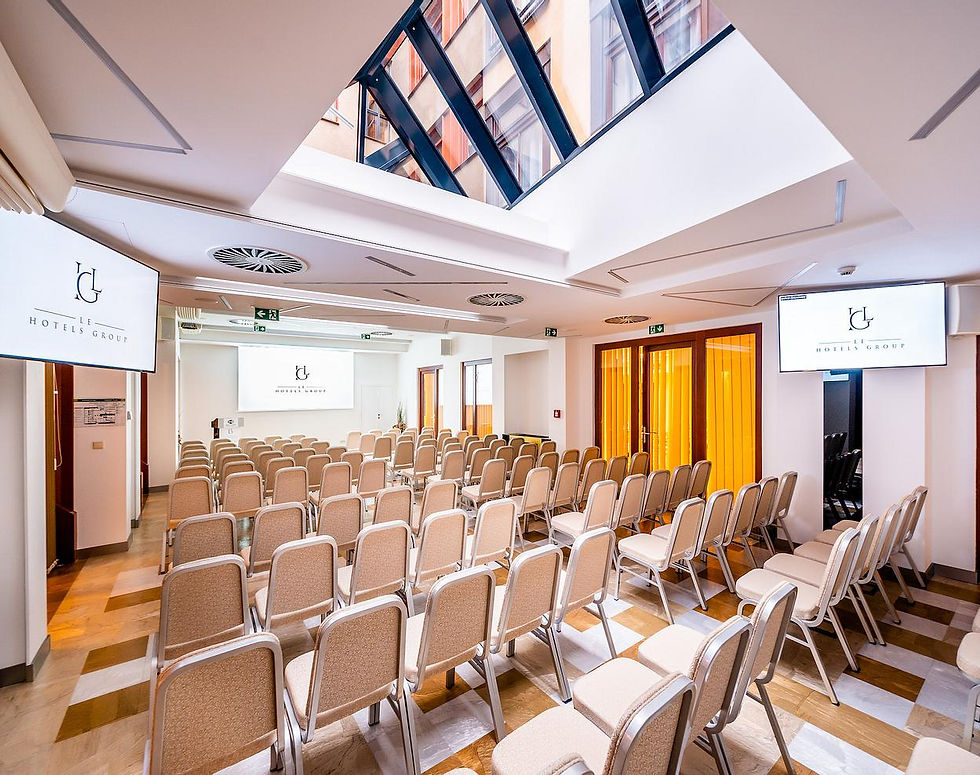
Majestic Plaza Hotel Prague is listed as EU Ecolabel certified in the RUMA Collection. For international corporate events, recognised certification can be useful because it gives planners a clearer evidence point to review during sourcing.
The venue offers accommodation, meeting rooms, private dining and conference facilities.
Best for: International meetings, conferences, workshops and private dining
Location: PragueCapacity: Up to 115 standing / 140 seated
Sustainable event suppliers matter too
A sustainable event is not created by the venue alone. Suppliers influence materials, transport, waste, guest experience and the overall footprint of an event.
When sourcing sustainable event suppliers, ask:
Do they use reusable, recyclable or lower-impact materials?
Can they avoid single-use items?
How far will they need to travel?
Can they consolidate deliveries?
Do they have a waste plan?
Can they provide clear information to support any sustainability claims?
Do they offer hire, reuse or donation routes after the event?
This is especially important for theming, decor, gifting, production, catering, floristry, signage and merchandise.
Supplier idea: Forbes Finishings

Forbes Finishings offers gift wrapping, team building and creative sessions with a sustainability angle. The supplier describes using sustainable packaging and gifts, avoiding Sellotape and showing guests how to reuse items such as old maps, comics and wallpaper.
This kind of supplier can work well for team building, gifting and festive events where businesses want something interactive, creative and less disposable.
Best for: Sustainable gifting, team building, festive workshops and creative guest experiences
How to reduce waste at corporate events
Waste prevention should come before waste management. That means planning to avoid unnecessary waste before thinking about what can be recycled later.
Practical ideas include:
Avoiding single-use signage where possible
Using digital agendas or reusable display screens
Choosing hired decor instead of bought props
Designing menus around accurate guest numbers
Asking caterers about surplus food plans
Avoiding disposable giveaways
Using refillable water stations where practical
Choosing venues with clear waste separation
Reducing printed materials
Designing event branding that can be reused
For food and drink, accurate numbers matter. Over-ordering creates waste, but under-ordering creates a poor guest experience. Work with the caterer or venue to plan realistic quantities, dietary requirements and surplus routes.
Think carefully about guest travel
Guest travel can be a major part of an event’s footprint. This does not mean every event must be local, but it does mean travel should be considered early.
For UK corporate events, think about:
Venues close to train stations
Accommodation on site or nearby
Coach transfers for larger groups
Clear public transport information
Avoiding unnecessary cross-city movement
Combining meeting, dining and accommodation where possible
A venue that keeps the whole event in one place may be a better option than a visually impressive space that requires multiple transfers.
Be careful with sustainability claims
This is where event marketing needs a steady hand.
Avoid vague claims such as “eco-friendly event”, “green event” or “fully sustainable event” unless you can clearly explain and evidence what that means. Instead, use specific language.
For example:
“The venue is accessible by public transport”
“The menu prioritised seasonal ingredients”
“Reusable event signage was used”
“Surplus food arrangements were discussed with the caterer”
“The event was hosted at a venue with recognised certification”
“Printed materials were reduced by using digital agendas”
Specific claims are more useful, more credible and less risky than broad, shiny statements that cannot be proved.
Sustainable event planning checklist
Before confirming your venue or supplier shortlist, ask:
Can guests reach the venue easily by public transport?
Can the venue host multiple parts of the event in one place?
Is accommodation available on site or nearby?
What waste and recycling systems are in place?
Can catering be planned to reduce food waste?
Are lower-impact menu options available?
Can signage, decor or production items be reused?
Are suppliers local or able to consolidate transport?
Can sustainability claims be evidenced?
Is the guest experience still strong?
The best sustainable events do not feel worthy or watered down. They feel thoughtful, well-planned and aligned with the values of the people attending.
Need help planning a more sustainable event?
RUMA Events helps clients source venues and suppliers for corporate events, retreats, conferences, away days, parties and private celebrations.
If you are planning an event and want to make more considered choices around venue sourcing, suppliers, guest travel, catering and waste, we can help you create a shortlist that fits your brief.
Submit your event brief and we will help you explore suitable venues and suppliers from the RUMA Collection.
References
[1] ISO 20121:2024, Event sustainability management systems
[2] UK Government guidance on applying the waste hierarchy
[3] UK Government food and drink waste hierarchy guidance
[4] WRAP hospitality and food service guidance
[5] CMA Green Claims Code
[6] GHG Protocol Scope 3 calculation guidance


Comments